Yogyakarta, July 11, 2026 – The Development Economics Study Program, Faculty of Economics and Business, Universitas Tanjungpura (UNTAN), participated in the 11th National Seminar and Annual Meeting of the Association of Indonesian Economics Study Programs (APSEPI), held from July 9–11, 2026, at the Learning Center Building, Faculty of Economics and Business, Universitas Gadjah Mada (UGM), Yogyakarta.
Carrying the theme, “Strengthening Economics Study Programs to Produce Independent and Globally Competitive Graduates,” the event brought together leaders and representatives of Economics Study Programs from universities across Indonesia. It served as a platform to strengthen institutional collaboration, exchange best practices, and formulate strategic initiatives for advancing economics education in response to evolving national and global challenges.
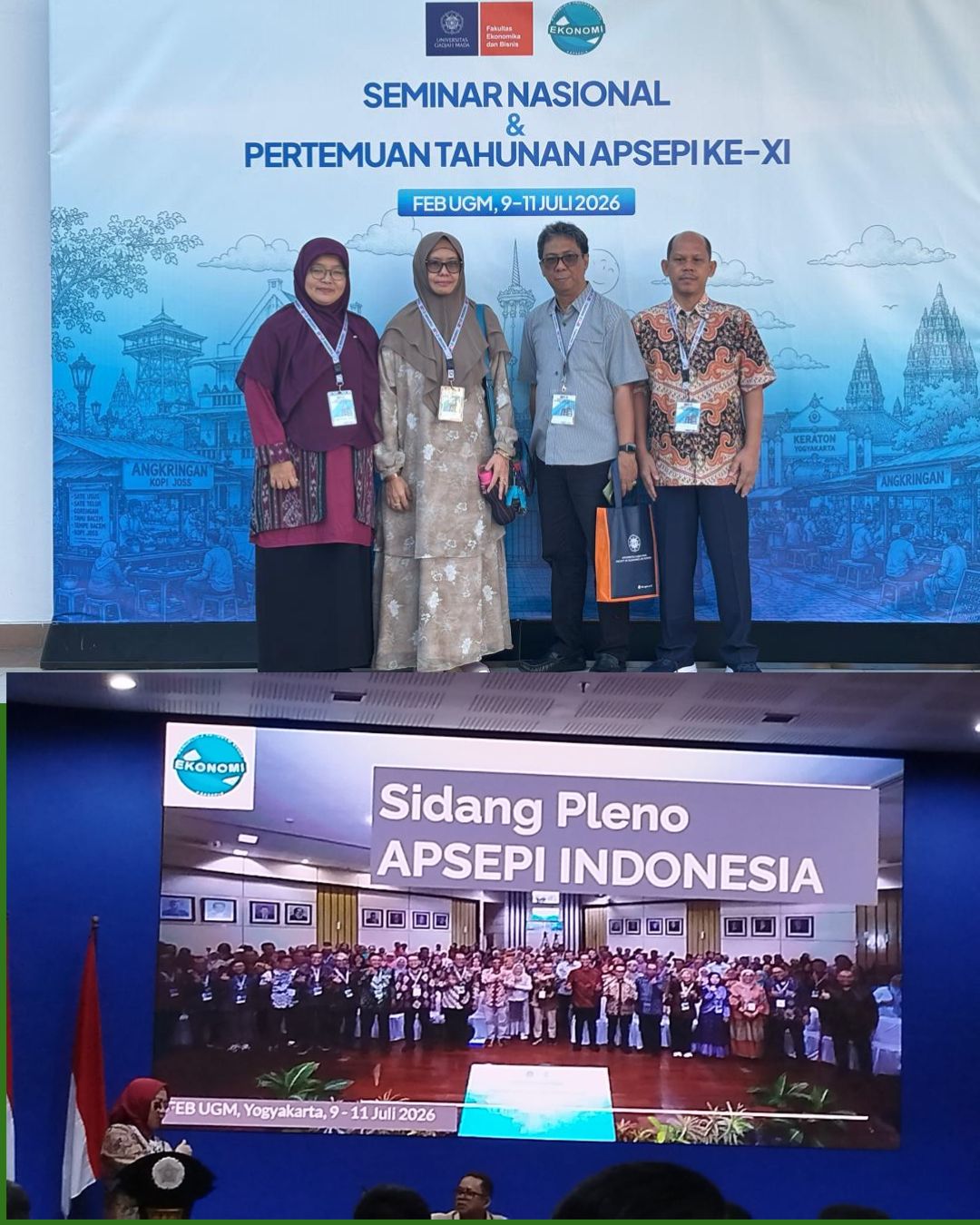
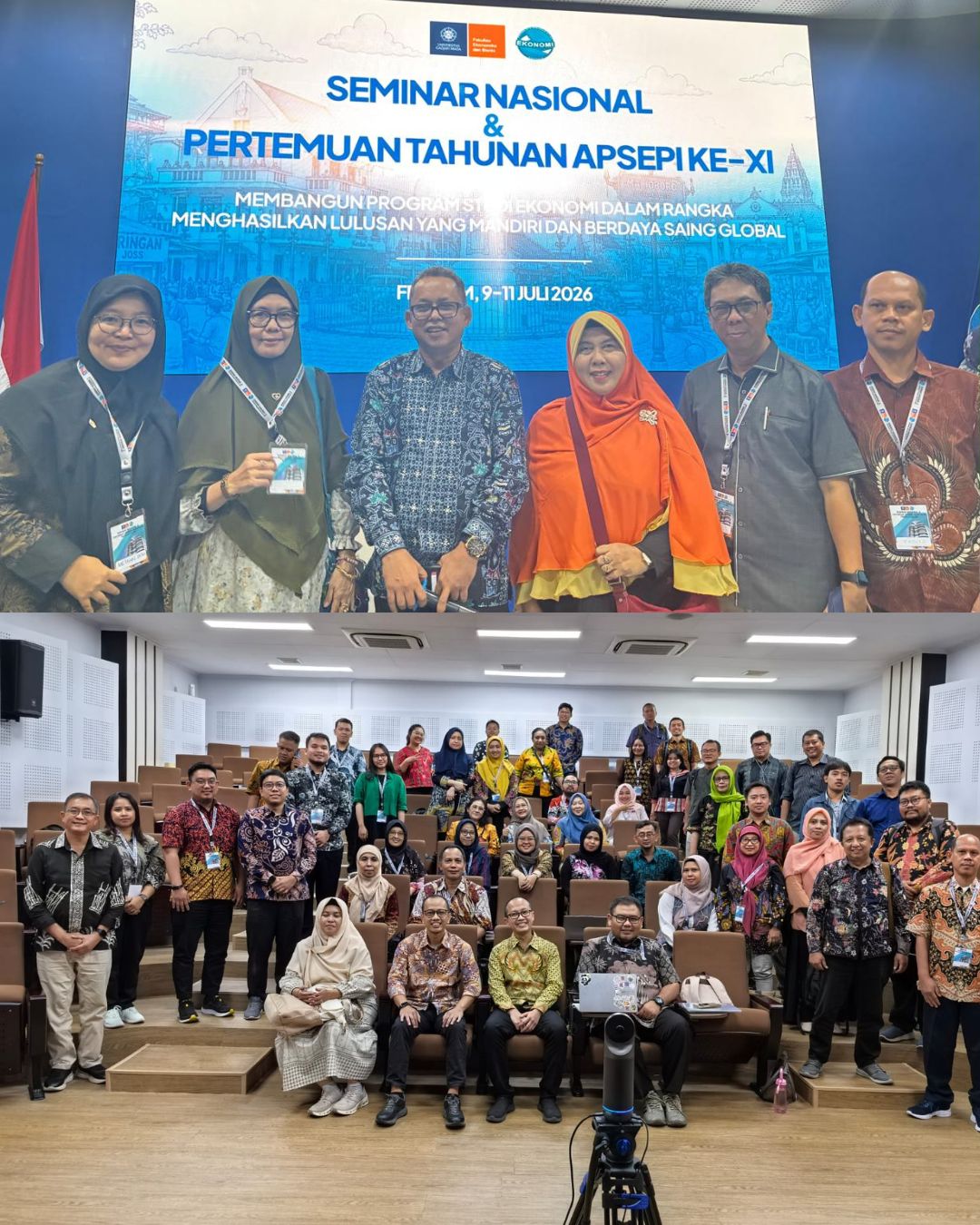
Throughout the event, the delegation from the Development Economics Study Program, Faculty of Economics and Business, Universitas Tanjungpura (UNTAN), actively participated in a series of academic sessions, including the National Seminar, keynote speeches, parallel discussion sessions, core economics course workshops, and the APSEPI plenary meeting. The discussions and presentations focused on strengthening Outcome-Based Education (OBE) curricula, enhancing study program governance, improving the quality of higher education, developing faculty competencies, reinforcing research and community engagement, and formulating strategies to achieve both national and international accreditation.
The participation of the Development Economics Study Program, FEB Universitas Tanjungpura, in this annual forum reflects its ongoing commitment to advancing the quality of higher education. Beyond expanding academic networks with Economics Study Programs across Indonesia, the event provided valuable insights and best practices that are expected to be implemented in curriculum development, teaching and learning processes, and study program governance. These efforts are aimed at producing graduates who are academically excellent, adaptable, and competitive at both the national and global levels.